What’s Your Skin Type? How Do You Know Your Skin Type?
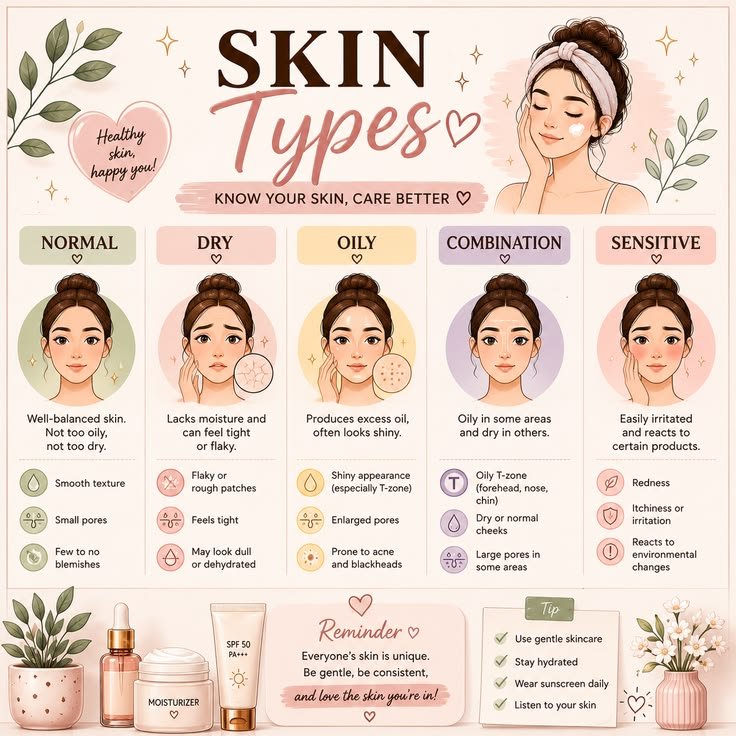
Do you know your skin type? Understanding whether your skin is oily, dry, combination, normal, or sensitive is one of the first steps toward building an effective skincare routine. Your skin type can influence which cleanser, moisturiser, sunscreen, serum, and other skincare products are most suitable for you. Using products without understanding your skin can sometimes lead to excessive dryness, oiliness, irritation, or clogged pores. The good news is that you can identify your basic skin type with a simple at-home observation test.What’s Your Skin Type? How Do You Know Your Skin Type? What Is Skin Type? Skin type refers mainly to how much oil (sebum) your skin naturally produces and how your skin behaves. Genetics, hormones, age, climate, stress, and skincare habits can all influence how your skin looks and feels. Skin Type Typical Characteristics Common Concern Normal Balanced oil and moisture, comfortable after cleansing Occasional dryness or breakouts Oily Noticeable shine, especially around the T-zone Excess oil, clogged pores Dry Tight, rough, flaky, or uncomfortable feeling Dryness and dehydration Combination Oily T-zone with normal or dry cheeks Uneven oil and moisture Sensitive Easily irritated, burning, stinging, or redness Reactivity and irritation Fact: Skin type and skin condition are not exactly the same thing. Your skin type tends to be relatively stable, while conditions such as dehydration, acne, sensitivity, or pigmentation can change over time. How Do You Know What’s Your Skin Type? One of the easiest ways to understand your skin type is to observe how your skin behaves after cleansing. The Simple Bare-Skin Test What You Notice After Cleansing What It May Indicate Skin feels comfortable with little shine Normal skin Face becomes shiny across most areas Oily skin Skin feels tight or rough Dry skin Nose and forehead are oily but cheeks feel dry/comfortable Combination skin Burning, itching, stinging, or significant redness Sensitive/reactive skin Fact: The goal of this test is to observe your skin without adding products that could temporarily change its appearance. 1. Normal Skin Normal skin generally has a relatively balanced relationship between oil and moisture. Facts About Normal Skin Best skincare approach: Focus on maintaining the skin barrier rather than using unnecessarily strong products. Product What to Look For Cleanser Gentle, non-stripping formula Moisturiser Lightweight or medium-texture hydration Sunscreen Broad-spectrum SPF Serum Hydrating or antioxidant-focused options 2. Oily Skin Oily skin produces more sebum than other skin types. You may notice shine shortly after cleansing, particularly around the forehead, nose, cheeks, and chin. Facts About Oily Skin Important fact: Having oily skin does not mean you should avoid moisturiser. Skincare Step Suitable Direction Cleanser Gentle gel or foaming cleanser Moisturiser Lightweight, non-comedogenic formula Sunscreen Lightweight, comfortable finish Exfoliation Moderate and targeted rather than excessive View More Post 3. Dry Skin Dry skin generally produces less oil, which can contribute to a rough, tight, or flaky feeling. Facts About Dry Skin Look For Why It Helps Gentle cleanser Helps avoid excessive stripping Humectants Help attract water to the skin Emollients Help soften the skin Occlusive ingredients Help reduce water loss Moisturiser Supports the skin barrier Fact: Dry skin and dehydrated skin are different. Dry skin is a skin type associated with lower oil production, while dehydration refers to insufficient water in the skin and can affect different skin types. 4. Combination Skin Combination skin is characterised by different areas of the face behaving differently. A common pattern is an oily T-zone—forehead, nose, and chin—with cheeks that feel normal or dry. what is your skin type Facts About Combination Skin Facial Area Possible Approach Forehead Lightweight hydration Nose Lightweight, non-comedogenic products Chin Lightweight hydration Cheeks More nourishing moisturisation if needed Fact: Combination skin often benefits from a balanced routine rather than treating the entire face as extremely oily or extremely dry. 5. Sensitive or Reactive Skin Sensitive skin may react more easily to skincare products, environmental changes, or certain ingredients. Signs can include burning, stinging, itching, redness, or discomfort. Facts About Sensitive Skin Fact: Sensitive skin is not simply another level of dryness. It describes how reactive the skin is and can overlap with other skin types. Skin Type vs. Skin Condition This distinction is important when choosing skincare. Skin Type Skin Condition Normal Acne Oily Dehydration Dry Hyperpigmentation Combination Redness Sensitive/reactive Temporary irritation Fact: Your skin type may remain relatively consistent, but skin conditions can change because of weather, hormones, stress, medication, lifestyle, age, or skincare products. What Ingredients Should You Choose for Your Skin Type? Choosing skincare becomes easier when you understand what your skin needs. Skin Type Ingredients/Features to Consider Normal Hydrating and barrier-supporting ingredients Oily Lightweight hydration, non-comedogenic formulas Dry Humectants, emollients, barrier-supporting ingredients Combination Lightweight hydration with targeted moisturisation Sensitive Simple formulas designed for sensitive skin Fact: An ingredient is not automatically suitable or unsuitable solely because of your skin type. Your individual tolerance, product concentration, formulation, and other ingredients also matter. How Often Should You Check Your Skin Type? You don’t need to perform a skin-type test every week. However, reassessing your skin can be useful when: Fact: Skin can behave differently in summer and winter. Humidity, temperature, and environmental conditions can influence how your skin feels. Quick Skin Type Checklist Question If Your Answer Is “Yes” Does your entire face become shiny relatively quickly? You may have oily skin Does your face feel tight after cleansing? You may have dry skin Is your forehead/nose oily but cheeks less oily? You may have combination skin Does your skin generally feel comfortable and balanced? You may have normal skin Does your skin frequently sting or become irritated? You may have sensitive/reactive skin Why Knowing Your Skin Type Matters Knowing your skin type can help you make more informed skincare choices instead of buying products based only on trends. For example, someone with oily skin may prefer lightweight textures, while someone with dry skin may prefer richer moisturisation. Someone with sensitive skin may want a simpler routine with fewer potential irritants. Key Facts to Remember Frequently Asked Questions How